During a recent visit to Charterhouse Lagos, His Majesty’s Trade Commissioner for Africa spoke about the quality of British education and the demand for it internationally. He was clearly impressed by the school and by the scale of the investment that has gone into it. It was encouraging to hear that response, particularly from someone whose role involves looking across countries and sectors at what Britain has to offer and where opportunities for partnership exist. But what interested me afterwards was the connection between his comments about education and the purpose of the visit itself.
British Education, African Ambition: Investing for the Long Term

John Todd
- Blog
- 11 November 2026

Content table
During a recent visit to Charterhouse Lagos, His Majesty’s Trade Commissioner for Africa spoke about the quality of British education and the demand for it internationally. He was clearly impressed by the school and by the scale of the investment that has gone into it. It was encouraging to hear that response, particularly from someone whose role involves looking across countries and sectors at what Britain has to offer and where opportunities for partnership exist. But what interested me afterwards was the connection between his comments about education and the purpose of the visit itself.
The Trade Commissioner came with the British Deputy High Commissioner. Their presence together suggested to me that the British government sees schools such as ours as a serious part of its trade relationship with Nigeria and Africa. That is understandable because education is an area in which Britain has considerable experience and an international reputation, and there are families around the world who actively want access to it. Establishing a school overseas brings investment, employment and a continuing relationship between institutions and countries. It also creates obligations which extend for many years beyond the visit or announcement that first draws attention to it.
Last month, in The New Geography of Educational Ambition, I wrote about Lagos beginning to emerge as an international education hub. The support of the Lagos State Government is important to that development. My argument was that families should increasingly be able to choose an excellent international education here because it is what they want for their children, rather than assume that the only real opportunities lie overseas. The visit made me think more carefully about one part of that change: the role of established British independent schools, the reasons their education is sought after, and the commitment involved in building them here.
What families value in British education
The Trade Commissioner’s comments reflected something familiar to those working in international education. British education has a reputation which travels well. There is demand for its qualifications, school traditions and the broader British independent school experience. That reputation has developed over a long time, through institutions and through the experiences of people who attended them. Many Nigerian families have their own connections with British independent schools and universities, so their interest is often informed by personal experience.
It is worth considering what families actually mean when they say they want a British education. Academic standards and access to university are clearly important, but they do not explain the whole attraction. There is also an expectation that school will offer breadth: that children will encounter music, drama, sport and activities which allow them to discover abilities they might not otherwise have recognised. Alongside that sits a view of education in which confidence, independence, responsibility and relationships deserve serious attention. Different families will place different weight on these things, but together they describe something more substantial than an examination programme.
At its best, this approach gives children room to grow while surrounding them with adults who know them well and expect something of them. A child may discover confidence through performing, learn to manage disappointment through sport or begin taking responsibility through the ordinary routines of school life. Those experiences depend on the quality of the people working with children and on the culture they create together. They are difficult to capture fully in a prospectus, although parents are often very good at recognising them when they visit a school.
British international schools vary considerably, and no national label tells a parent everything they need to know. At the same time, British independent schools have a strong international reputation for delivering a distinctive educational tradition that many families value. The opportunity for British independent schools overseas is to share the best of that tradition in settings where families want it, while understanding and responding to the children and communities they are there to serve.
When an established school comes to Lagos
For many years, Nigerian families who wanted this education commonly accessed it by sending their children to Britain. Those connections remain important, and overseas schooling will continue to be the right decision for many families. But the arrival of established British independent schools in Nigeria allows another question to be asked. How much of the education a family values is now available closer to home?
British curricula and qualifications have been taught here for a long time. What is developing now includes a more direct relationship with established British institutions. That relationship carries expectations. A family choosing a school associated with a recognised name will reasonably want to understand what the connection provides: how the schools work together, what professional experience is shared and how the educational philosophy is reflected in daily practice. The name attracts attention because families associate it with a particular educational experience. The work is to make that experience available in a new school.
At Charterhouse Lagos, we draw on over 400 years of British educational history while building an institution whose daily life is taking shape in Nigeria. There are traditions and expectations worth carrying forward, but also decisions which have to be made with an understanding of the place in which we work. Nigerian colleagues, families and children bring knowledge and perspectives which help shape the school. As I have argued previously, international education becomes more convincing when the exchange works in both directions.
The opportunity here is considerable. A family can have access to an established educational tradition while a child remains close to parents, relatives and the society in which they are growing up. That can provide a strong foundation from which a young person later chooses to study or work elsewhere. The difference is that departure becomes a decision to make at the appropriate time, rather than something assumed to be necessary from the outset.
Why government takes an interest
Seen in that context, the involvement of the Trade Commissioner and Deputy High Commissioner makes sense. British schools overseas form part of a relationship which includes educational expertise, business partnerships and investment. Their visit suggested a recognition that education deserves attention within that wider picture, and that there is a serious opportunity to develop it here.
I think we should be comfortable discussing that. Schools require investment and sound financial management if they are to provide continuity for children and families. Establishing one creates jobs and demand for local businesses, and sustaining it requires a considerable range of professional skills. There are also effects beyond the school itself. The availability of good education can influence whether someone accepts a job in Lagos, whether a Nigerian family returns from overseas or whether parents feel able to build their future here. That possibility of return, sometimes described as “reverse japa”, was one of the questions I explored last month.
There is an important British interest in supporting institutions which carry its educational reputation into other countries. There is an equally important Nigerian interest in what those institutions can provide here. Families gain choices, educators gain professional opportunities, and investment helps build capacity within the country. The strongest partnerships will be those in which both sides can see value and have reasons to remain committed over time.
That last point is particularly relevant to schools. Parents are making decisions which may affect much of a child’s upbringing. They need confidence in the people leading the institution and in its ability to continue providing the education promised. A school therefore asks something substantial of everyone involved: families, staff, educational partners and investors. Government interest is encouraging, but the relationship ultimately has to be sustained through the experience of those who depend on the school each day.
What the investment tells us
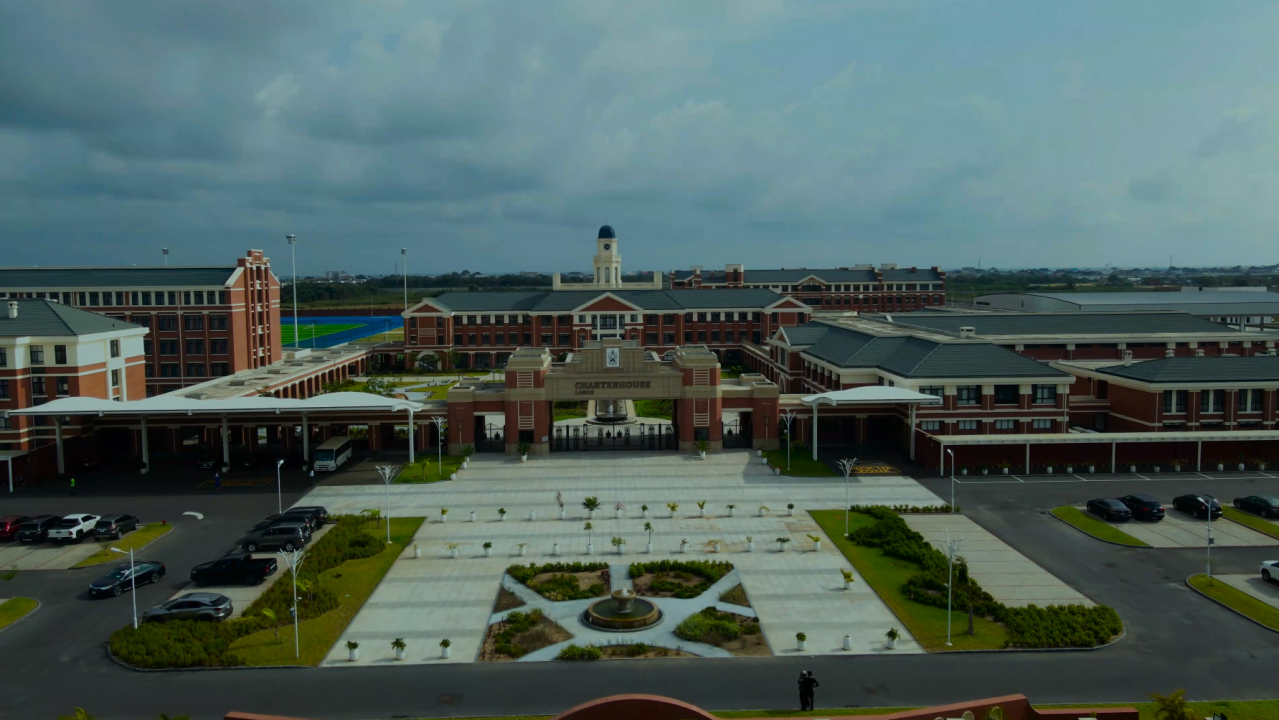
One of the things that came through strongly in the Trade Commissioner’s response was his appreciation of what has been built at Charterhouse Lagos. Naturally, visitors notice the campus and its facilities. For those of us involved in developing the school, it is nice to hear someone recognise the ambition behind the project. But the buildings also raise a question about what it takes to commit to an undertaking of this kind.
Long before a school welcomes its first children, people have to make consequential decisions about land, design, construction and provision. They have to decide what the institution should eventually be capable of offering and how much they are prepared to invest before its community exists. Those decisions require a belief that families will want the education being planned, as well as confidence in the country and city in which it will be provided.
Facilities matter because they shape what children and teachers can do. A broad education needs appropriate provision, and good spaces can support opportunities which would otherwise be difficult to offer. At the same time, anyone who has worked in schools knows that provision has to be brought to life by people. A well-equipped school needs excellent teaching, thoughtful leadership and children who are encouraged to participate. The investment creates possibilities; the school’s daily work determines how fully they are realised.
What interests me about the scale of the commitment here is how far ahead it requires people to think. A new school begins with a relatively small community and grows over time. Its programmes develop, its staff gain experience together and successive groups of children move through it. Investment has to support the school as it is now while allowing for the institution it intends to become. Much of what a visitor sees therefore represents decisions made for children and families who have yet to join us.
Thinking twenty-five years ahead
The anticipated payback period makes the extent of that commitment clear. When an educational investment is expected to take twenty to twenty-five years to pay back, it is difficult to describe it as anything other than long term. A child entering school today could complete their schooling, go to university and begin working before that period has elapsed. Those providing the investment are making decisions on a timescale which extends across a generation.
I think that deserves more attention in discussions about new schools. There is often considerable interest in the opening, the facilities and the fees, all of which are understandable subjects. Less attention is given to the patience required from those committing resources. A school has to recruit and develop staff, establish its culture, earn the trust of families and maintain standards as it grows. None of that is completed when construction finishes. In many respects, that is when the most important work begins.
A period of twenty to twenty-five years also requires confidence beyond the institution itself. Over that time, governments will change, economic conditions will vary and the needs of families will develop. Education will change too. The commitment involves building a school capable of adapting while retaining a clear sense of purpose. It means believing that the country will continue to offer reasons for families to live, work and educate their children here.
There are, of course, returns which appear much earlier than financial payback. Parents see a child becoming more confident or making progress with something they once found difficult. Teachers see the effects of their work, and a school community begins to develop relationships and traditions of its own. Over time, former students give us a better understanding of what their education has helped them become. These experiences are the reason the institution exists, and patient investment allows the school to sustain that work across successive generations.
An investment in Nigeria’s educational future
The British dimension of this story is significant, but it is only part of it. The demand comes from families with ambitions for their children, and the institution develops through the efforts of people working here. Nigerian investment, professional expertise and confidence in the future are central to what is happening. British educational experience becomes valuable through the way it meets those ambitions and helps build a school which families want to choose.
This is also where the discussion connects with the wider development of education in West Africa and across the continent. Different cities and countries will develop in different ways. There will be partnerships which succeed and others which prove more difficult. But the willingness to establish substantial institutions suggests that people see an educational future here worth investing in. That is a meaningful change in outlook, particularly where international education has so often been associated with sending young people elsewhere.
Schools established for the long term also have opportunities to contribute beyond their own pupils. They can develop teachers and leaders, build professional relationships and share experience with others. Those contributions need to be worked at, and no individual school should exaggerate its wider impact. Nevertheless, an institution expecting to be part of a city for decades ought to take an interest in the educational community around it. Its own development will increasingly be connected to that community’s future.
The Trade Commissioner’s visit brought these questions together for me. His comments about the quality of British education and the demand for it were encouraging, as was the interest shown by both him and the Deputy High Commissioner in what is being built here. Their presence helped underline the significance of education within the relationship between Britain and Nigeria. The investment behind the school gives that relationship a physical presence and a commitment extending many years into the future.
Last month, I asked what happens when educational ambition no longer automatically requires geographical departure. Part of the answer depends on people being willing to build institutions which families can choose with confidence. That requires educational experience, excellent people and resources committed over a considerable period. A payback horizon of twenty to twenty-five years gives some indication of the patience involved.
A school built with that patience has the opportunity to become part of the lives of generations of families. If we do our work well, its contribution will continue long after the original investment has been repaid.
#InternationalEducation #BritishEducation #EducationInAfrica #Nigeria #EducationLeadership