In 2025, Nigerians spent approximately US$2.845 billion on education-related travel overseas, according to data obtained from the Central Bank of Nigeria by Financial Vanguard. That was 14.5 per cent more than in 2024. The figure deserves attention. It represents far more than private tuition payments. It shows the scale of Nigerian families’ determination to secure the education they believe will provide quality, credibility and global opportunity. It also reveals how other countries’ educational institutions, economies and professional networks benefit when many families do not yet feel that demand can be met consistently here at home.
Educating the Elite: Are We Exporting Our Future?

John Todd
- Blog
- 16 September 2026

Content table
In 2025, Nigerians spent approximately US$2.845 billion on education-related travel overseas, according to data obtained from the Central Bank of Nigeria by Financial Vanguard. That was 14.5 per cent more than in 2024. The figure deserves attention. It represents far more than private tuition payments. It shows the scale of Nigerian families’ determination to secure the education they believe will provide quality, credibility and global opportunity. It also reveals how other countries’ educational institutions, economies and professional networks benefit when many families do not yet feel that demand can be met consistently here at home.
I can understand the choices families make. Parents are responding to legitimate concerns about quality, continuity, safety and access to respected qualifications. For many students, overseas education is enriching and transformative. Nigeria will continue to benefit from citizens who study abroad, develop international relationships and return with valuable knowledge and experience. The question, therefore, is not whether Nigerian students should go overseas. It is what happens when overseas education becomes the assumed route for a substantial proportion of the young people most likely to become future leaders, investors, professionals and innovators.
Much of our discussion about education in Nigeria is rightly concerned with access, quality and equity. We need more children in school, better teaching and stronger learning outcomes. Education must create genuine opportunities for social mobility rather than reinforce existing disadvantage. These are urgent national priorities, but they are not the whole of the education question. Alongside them sits another issue that receives less attention: where is Nigeria’s elite human capital being formed?
What the money represents
The financial data becomes even more real when considered alongside student numbers. In the 2024–25 academic year, 21,847 Nigerian students were studying in the United States. Open Doors estimated their contribution to the US economy at US$889 million. According to the Higher Education Statistics Agency, a further 30,760 Nigerian students were enrolled in UK higher education. Those two destinations alone hosted more than 52,000 Nigerian students.
We should not interpret this as 52,000 people permanently lost to Nigeria. Some will return quickly. Others will contribute from abroad, move between countries or build partnerships that benefit Nigeria. The diaspora remains an important source of expertise, investment and international connection. Indeed, Nigeria’s relationship with its diaspora is one of its great strengths, and any serious account of overseas education must recognise the contribution made by Nigerians who live and work internationally.
The figures show where a significant body of Nigerian talent is spending its formative years, building relationships and entering professional networks. They bring us back to the central question: where is Nigeria’s elite human capital being formed and anchored?
The financial consequences also deserve careful consideration. Money spent overseas supports universities, accommodation providers, local businesses and employment in the receiving countries. It strengthens institutions that can reinvest that income in facilities, research and teaching. We cannot assume that the full US$2.845 billion would have remained in Nigeria if more local alternatives had existed. Families make complex decisions, and some would continue to choose an international experience regardless of the options available at home. Nevertheless, the scale of the expenditure reveals substantial demand for a kind of education that many families do not yet believe they can find reliably in Nigeria.
The figures do not suggest any absence of Nigerian ambition. If anything, they demonstrate the sacrifices families are prepared to make to secure what they regard as an excellent education. The strategic question is whether more of that ambition, investment and confidence can be directed towards institutions within Nigeria itself.
Education produces more than qualifications
Education is often thought about as a way of acquiring knowledge, skills and credentials. All three matter. Strong schools and universities develop intellectual confidence and professional competence while providing the qualifications young people need to progress. But education also has a formative role that is more difficult to measure.
Young people build some of their most important relationships through education. This has particular significance in Nigeria, where personal relationships and trusted networks play an important role in business and professional life. Classmates may later become colleagues, business partners, investors or public leaders. Teachers and mentors influence how young people understand responsibility and success, while the institutions around them shape their expectations of what works, what is possible and where opportunity is likely to be found. Over time, these experiences contribute to a sense of belonging.
A student who spends important formative years in another country does not simply receive a qualification there. The student learns how that society works, becomes familiar with its institutions and begins building a life within its professional and social environment. Internships, first jobs and early business relationships may follow. Returning to Nigeria can then involve leaving behind networks and opportunities developed over several years.
There is considerable value in this international exposure. Encountering other cultures and institutions can broaden perspective, strengthen independence and challenge assumptions. Nigeria needs people who understand the world and can operate confidently across borders. The concern arises when global opportunity becomes closely associated with leaving, while home is increasingly seen as somewhere from which ambitious young people must distance themselves in order to succeed.
Education helps shape where people imagine their futures. It does not determine their choices, but it affects the relationships and assumptions from which those choices are made. This is what I mean by anchoring. Education can connect people socially, professionally and psychologically to a place. When a significant proportion of a country’s highly resourced young people are educated elsewhere, some of the human capital created through that education will naturally become connected to other societies and economies.
Defining elite education carefully
The language of elite education can be uncomfortable, especially in a country where access to basic education remains profoundly unequal. It can appear to place the interests of already privileged families above the needs of the wider population. That is not the case I am making.
By elite human capital, I mean those people who are likely to exercise significant influence through leadership, investment, entrepreneurship, professional expertise, innovation or public service. Some will come from families with established wealth and opportunity. Many others may emerge through scholarships, social mobility and the recognition of talent in every part of society. A healthy education system must continually broaden the routes through which capable young people can develop into national leaders in every sphere of life.
Access and elite formation should therefore be understood as connected concerns. Expanding access allows a country to discover and develop talent that would otherwise be excluded. Improving quality enables that talent to flourish, while greater equity helps ensure that leadership is not drawn from an unnecessarily narrow section of society. National development also depends partly on whether people with knowledge, resources and influence remain sufficiently connected to the country to build institutions, create employment and extend opportunity to others.
Educating young people in Nigeria will not automatically make them committed to national development. A local education is no guarantee of public spirit, just as an overseas education does not remove a person’s connection to home. Many Nigerians educated abroad retain a strong commitment to the country and make important contributions from within Nigeria and across the diaspora.
My argument is about creating favourable conditions rather than predicting individual choices. If young people develop their strongest relationships, earliest professional networks and sense of possibility within Nigeria, they may be more likely to see the country as somewhere they can build a life and career. Education at home can support long-term affiliation, although families, employers, public institutions and the wider economy will all influence what happens next.
Excellence without early detachment
Nigeria needs more opportunities for young people to receive a genuinely globally competitive education within the country. This requires more than adopting an international curriculum or placing a recognised name above a school entrance. Families considering overseas education are looking for substance: evidence-informed teaching, reliable systems, strong safeguarding, a holistic values-driven outlook, respected qualifications, ambitious expectations and credible pathways to the world’s leading universities.
Providing education of that standard requires sustained investment. It depends on capable teachers and leaders, thoughtful governance, professional development and facilities that support the education being promised. International schools must also respond intelligently to their Nigerian context. Global standards should be accompanied by a meaningful connection to the country in which a school operates.
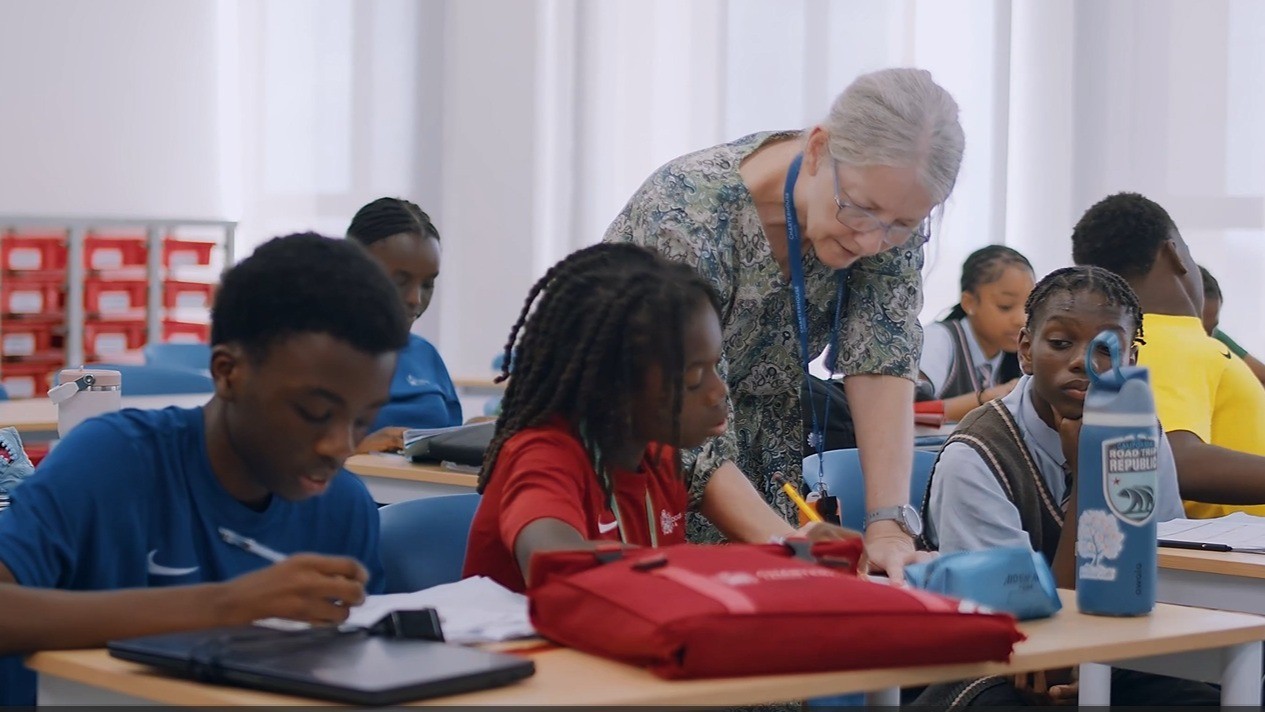
This is how I understand the purpose of Charterhouse Lagos. I do not present it as the answer to a national challenge or claim that one school can transform Nigeria’s education system. It is better understood as an example of institutional design: an effort to combine international academic standards with deep national grounding, so that excellence does not require early separation from the Nigerian environment.
Students educated in this setting can develop the confidence and qualifications needed to participate internationally while building relationships at home. Their classmates may later become colleagues, founders, professional advisers or investors. Those networks are formed among young people who share an understanding of Nigeria’s possibilities and frustrations, and who may one day work together to address them.
Many of these students will still attend university overseas, and there are good reasons for them to do so. They may need specialist courses, wish to encounter a different culture or benefit from the independence that comes with living abroad. International movement is not the problem. The opportunity lies in ensuring that young Nigerians can enter the world with strong roots at home rather than feeling that serious education begins only when they leave.
Beyond individual students
The value of globally competitive education within Nigeria cannot be measured only through the students enrolled in a particular school. Institutions also develop teachers and leaders, create employment, purchase goods and services and contribute to professional standards. They can bring international experience into Nigeria while enabling Nigerian experience to influence wider educational conversations.
Partnership offers another route to wider impact. Teacher development, leadership training, safeguarding and the sharing of expertise can connect individual institutions to the broader education system. Schools, universities, employers, professional organisations and government all have a part to play in creating stronger pathways from education into national life.
There are encouraging signs that this wider educational ecosystem is beginning to develop. At the national level, the Nigeria Education Sector Renewal Initiative connects education reform with the ambition to move Nigeria from a resource-based to a knowledge-based economy. Its focus on science and technology, education quality, digital capability and global partnerships reflects an understanding that education must develop the people Nigeria will need in the future.
The National Universities Commission’s framework for transnational education is especially relevant. It recognises the risk that developing countries invest in talent that subsequently becomes established elsewhere, while presenting transnational education as one way to widen access to global expertise within Nigeria. The framework is also appropriately cautious. International partnerships must strengthen Nigerian institutions and maintain quality if their benefits are to be felt across the national university system.
This national direction is also visible within Lagos. Lagos State has announced plans for a ten-year Education Sector Plan covering 2025 to 2035, intended to connect improvements in access and quality with skills, employment and economic development. The formation of human capital cannot be separated from the environment in which people will eventually work, invest and contribute. Schools and universities can educate capable young people, but those young people also need a society able to recognise and use their capabilities.
We are also seeing new forms of international higher education taking shape within Lagos. The University of Lagos and the University of Birmingham are developing proposals for transnational programmes, while plans involving Coventry University at Alaro City point towards another possible model. These initiatives remain at different stages, and their eventual impact will depend on quality, affordability and successful implementation. Even so, they suggest that internationally recognised education need not always require the physical export of Nigerian students. Global educational expertise can be brought into Nigeria, developed through local partnerships and connected to national priorities.
These developments are encouraging, but their value will ultimately depend on whom they serve and how deeply they become connected to Nigeria’s wider education system. We should avoid creating isolated islands of excellence. An excellent institution that remains disconnected from its surroundings may serve its own students well while contributing little to wider national capacity.
Affordability remains a serious limitation. International-standard independent education and transnational university programmes will not by themselves resolve Nigeria’s challenges of access or inequality. They must sit alongside sustained efforts to strengthen public education, widen participation and expand opportunity. Acknowledging those limitations should not prevent us from considering the contribution such institutions can make. National capacity is built through the cumulative work of many organisations, each taking responsibility for the part it can reasonably influence.
A more complete education agenda
Nigeria’s education agenda must continue to focus on access, quality and equity. Nothing in this argument reduces the urgency of those priorities. A complete education strategy should also consider the geography of human-capital formation.
We need to understand why so many families believe excellence requires departure and then build credible alternatives. Criticising parents for making rational choices within the options available to them will achieve very little. A more useful response is to create institutions in Nigeria that can earn their confidence.
A confident education system should welcome exchange and maintain strong connections with the rest of the world. Nigeria needs people with international knowledge, experience and networks. Overseas study should remain a valuable choice, but it should not be regarded as an assumed condition of educational excellence.
If more young Nigerians can receive an internationally competitive education at home, some of the financial benefits will remain in Nigeria. Educational spending can support Nigerian institutions, teachers, employees, suppliers and communities. The developmental benefit may be more important still. Young people can acquire global capability while forming relationships and ambitions within the country whose future they may one day influence.
The US$2.845 billion spent during 2025 is more than an economic statistic. So are the tens of thousands of Nigerian students enrolled in the United States and the United Kingdom. Together, the figures invite us to examine what Nigeria currently provides, what families are seeking and what the country may be allowing to form elsewhere. Behind the data are thousands of individual decisions, each understandable on its own. Taken together, they raise a national question that deserves a more prominent place in our education debate:
Are we exporting our future – or anchoring it?