Over the past few weeks, I have found myself noticing the same thing repeatedly across the school.
It is not simply that students have settled into the term. It is how they are working once lessons begin.
Over the past few weeks, I have found myself noticing the same thing repeatedly across the school.
It is not simply that students have settled into the term. It is how they are working once lessons begin.

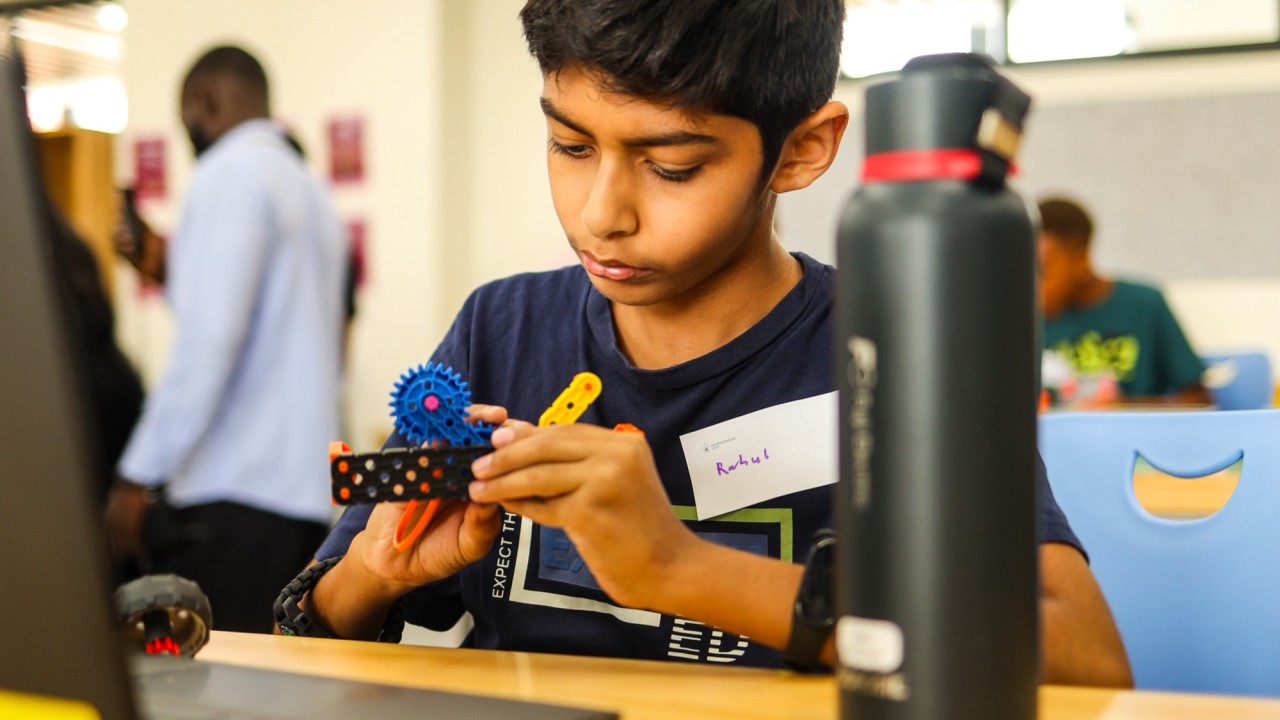

Over the past few weeks, I have found myself noticing the same thing repeatedly across the school.
It is not simply that students have settled into the term. It is how they are working once lessons begin.
There is a tendency to talk about academic success in terms of ability — who is naturally strong, who has potential, who will go on to achieve highly. In practice, what makes the difference day to day is much more straightforward.
It is whether students know how to work.
Students are starting more quickly, organising themselves without prompting, and sustaining focus for longer. That is where progress is made.
In lessons, this shows in small but important ways.
Students are more willing to attempt difficult questions rather than waiting to be shown. They are listening more carefully to feedback and making use of it. Written work is improving not because tasks are easier, but because students are putting more thought into how they respond.
Teachers are able to move learning forward more efficiently because less time is spent establishing expectations and more time is spent developing understanding.
These are not dramatic changes, though they are significant ones.
These improvements are not the result of a single initiative. They come from repetition.
When expectations are applied consistently, students begin to internalise them. They understand how to begin a task, how to structure their work, and how to respond when something is challenging.
This is where routine matters. It removes uncertainty and allows students to focus on the work itself.
For many students, particularly those in boarding, this structure continues into the evening.
Supervised preparation is not simply a time to complete homework. It is a continuation of the school day, where students sit down at a set time, work in a focused environment, and develop the discipline to complete tasks properly.
Over time, this consistency builds independence. Students become less reliant on reminders and more responsible for the quality of their work.
These habits become increasingly important as students move towards external examinations.
Recently, we conducted our Year 10 scholarship examinations. What stood out was not only ability, but the approach students took — how they managed their time, how carefully they read questions, and how they sustained their effort.
This week, we have also launched our Year 12 scholarships as we prepare for the opening of Sixth Form in September 2026.
Both are part of the same pathway. Success at IGCSE and A level depends on the habits that are being developed now.
For families considering the next step, these are the things that are easiest to recognise when visiting.
You see how quickly students settle, how lessons begin, how work is approached, and how consistently expectations are applied.
Our Open Day on Saturday 9 May will provide an opportunity to see this in practice, to speak with staff and students, and to understand how these routines support learning across the school.
Families are warmly invited to visit Charterhouse Lagos to see how these routines are embedded across both Primary and Secondary, and how they prepare students for Year 10 (IGCSE) and Year 12 (A level).
With our Open Day on Saturday 9 May approaching, we encourage families to visit early to experience the school in action. Admissions for September 2026 are ongoing, and our admissions team would be delighted to arrange individual tours or assessments at a convenient time.
#CharterhouseLagos #BritishEducation #IGCSE #ALevels #SixthForm #BoardingSchool #SecondaryEducation #EducationInNigeria #FutureReady