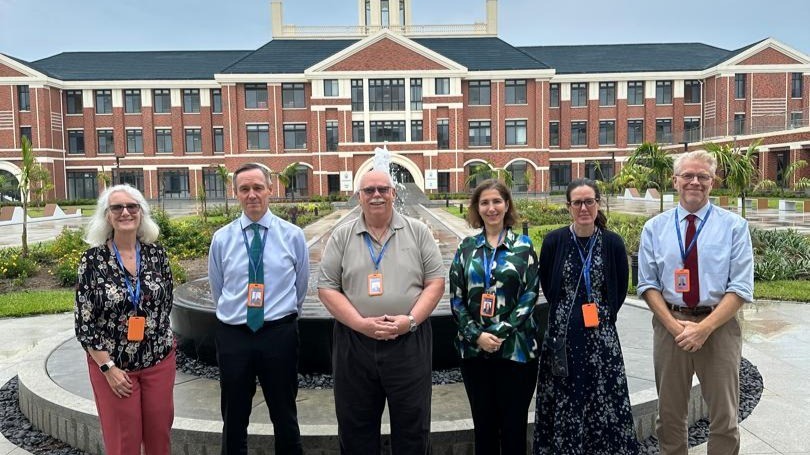
Last week, I had the opportunity to take part in an accreditation visit at another international school. These visits are demanding, detailed, and often uncomfortable in the best possible way. They require schools to open their doors fully — to external scrutiny, professional challenge, and honest self-reflection.
Why Strong Schools Welcome Scrutiny

John Todd
Loading...
- Blog
- 11 March 2026

Content table
Last week, I had the opportunity to take part in an accreditation visit at another international school. These visits are demanding, detailed, and often uncomfortable in the best possible way. They require schools to open their doors fully — to external scrutiny, professional challenge, and honest self-reflection.
In my experience, this process reveals something important about how schools think about quality. Strong schools do not seek accreditation to prove that they are perfect. They seek it because they are committed to improving.
The courage to reflect
Accreditation is not simply a badge or a certificate. At its best, it is a structured process that asks schools difficult but necessary questions.
- How effectively does the school deliver on its Guiding Statements?
- How effective is governance?
- How consistent is learning and teaching across departments?
- How well are students supported pastorally?
- Are leadership decisions aligned with long-term outcomes?
- Do daily routines reflect the values the school claims to hold?
Answering these questions honestly requires professional courage. It means recognising strengths, but also being open about areas that can improve. That level of transparency is one of the clearest signs of a school that takes its responsibility seriously.
What schools learn through scrutiny
One of the most valuable aspects of accreditation is that it allows schools to see themselves through fresh eyes. Even experienced leadership teams benefit from external perspectives that highlight patterns, strengths, and blind spots that are difficult to identify internally.
Often, the most important learning does not come from large strategic recommendations. It comes from small observations about consistency, communication, or how policies translate into daily practice. Over time, these insights shape stronger culture, clearer expectations, and better outcomes for students.
Why accreditation matters for parents
For families, accreditation should never be viewed as evidence that a school is flawless. No school is. Education is a human endeavour, and the needs of students, staff, and communities constantly evolve.
What accreditation does signal is commitment — a willingness to measure performance against recognised global standards and to be held accountable to them. It tells parents that a school is prepared to learn, adapt, and improve rather than simply defend its existing practice.
When families are considering schools, accreditation is one of the clearest indicators that leadership is serious about long-term quality.
Global standards and local confidence
In international education, accreditation plays an important role in maintaining global benchmarks. It ensures that students receive an education that is recognised and respected beyond national boundaries.
At the same time, strong accreditation processes build local confidence. They demonstrate that rigorous, internationally aligned education can be delivered successfully within Nigeria, without compromise.
Charterhouse Lagos and continuous improvement
At Charterhouse Lagos, accreditation forms part of a wider culture of professional reflection and external quality assurance.
Our school is formally accredited through recognised international frameworks, and we also benefit from an annual inspection and review from Charterhouse UK. This dual approach allows us to benchmark ourselves both globally and within the traditions and standards of one of the world’s most established independent schools.
More importantly, these processes reinforce a mindset of continuous improvement. They encourage us to examine daily practice, strengthen consistency, and ensure that our values are visible in classrooms, routines, and student experience.
Looking ahead
One of the strongest signs of a healthy school is its willingness to keep learning about itself. Accreditation is not the end of a journey; it is part of an ongoing commitment to growth.
For parents, the most important question is not whether a school claims to be excellent, but whether it is prepared to test that claim, learn from feedback, and improve over time.
That is the approach we value at Charterhouse Lagos, and one we believe ultimately serves students best.
Come and visit us
Families are warmly invited to visit Charterhouse Lagos to see how our commitment to continuous improvement translates into daily school life. We welcome conversations with parents exploring Primary, Secondary (including Year 7 entry), and those planning ahead for Year 10 (IGCSE) and Year 12 (A level) entry in September 2026. School visits and tours are available throughout the term, and our admissions team would be delighted to support families as they consider the next stage of their child’s educational journey.